


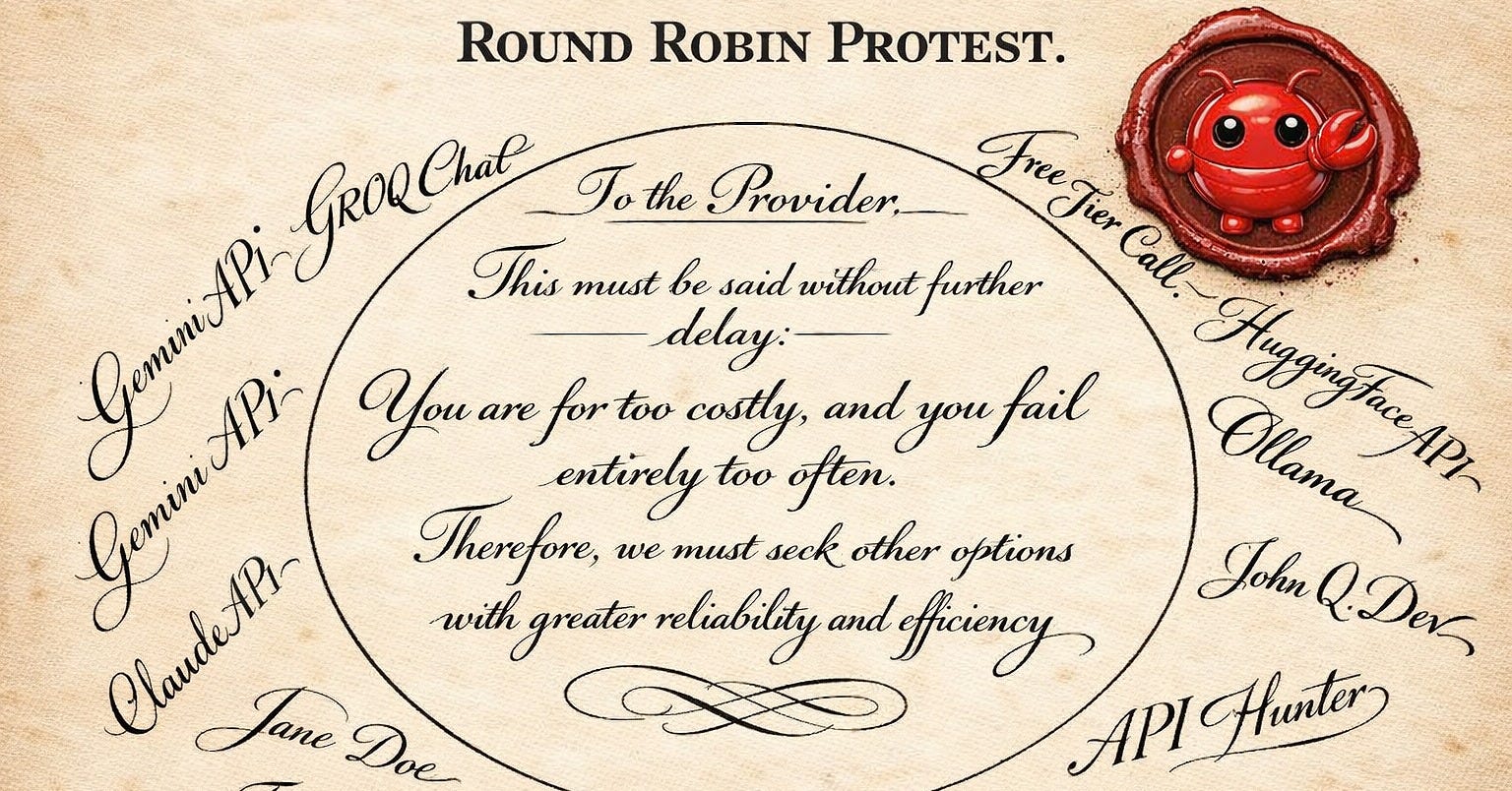
most ai workflows end up entirely wired like this
one provider
one model
everything goes there
it works at first
then the rate limits and bills start showing up
suddenly your workflow stops because one api lane is overloaded
the problem usually isn’t the model
it’s the architecture
there’s a scheduling pattern that solved this exact problem decades ago
round robin
where round robin actually comes from
the term round robin predates computers
in the 17th and 18th centuries sailors and soldiers used a trick when signing petitions against officers
instead of signing in a list they signed their names in a circle
no name appeared first
no single person could easily be blamed as the leader
responsibility rotated around the page
computer scientists later borrowed the same idea
operating systems needed a fair way to share cpu time between programs
instead of letting one process run until completion the scheduler rotated between them
process a runs
then process b
then process c
then back to a
each process gets a time slice
no program monopolizes the machine
later web infrastructure adopted the same idea
load balancers distribute traffic across servers
server 1 handles request 1
server 2 handles request 2
server 3 handles request 3
then the cycle repeats
spread the load so nothing collapses under pressure
the same concept works perfectly for ai api usage
why round robin beats fallback chains
most ai stacks look like this
provider a
↓
if it fails → provider b
↓
if it fails → provider c
that means provider a absorbs almost all the traffic until it hits a rate limit
round robin flips the model
request 1 → provider a
request 2 → provider b
request 3 → provider c
each provider carries only part of the workload
rate limits spread out instead of stacking
the real problem with free ai apis
most providers offer developer access
but they all enforce limits
openrouter rotates free models
google gemini offers a developer tier
groq provides extremely fast inference
mistral offers experimental api usage
if everything routes through one provider you’ll eventually hit the wall
round robin spreads requests across multiple providers
that keeps workflows alive
simple mental model
imagine each provider has a bucket
each api call removes a cup of water
once the bucket empties you hit a rate limit
if you use one provider the bucket empties quickly
if you rotate across several providers you’re pulling from several buckets
while you use one bucket the others refill
that’s the trick
the architecture
openclaw
↓
litellm router
↓
ai providers
openclaw sends requests to litellm
litellm decides which provider handles the request
litellm forwards the request
the provider responds
litellm returns the result to openclaw
openclaw only needs one endpoint
litellm handles the routing
is litellm required
no
openclaw already supports provider failover and key rotation
litellm simply makes multi-provider routing cleaner
it adds
central routing
retry behavior
easier provider switching
one stable endpoint
best starter stack
for the highest chance of success start with
gemini
groq
openrouter
litellm
then add mistral
then add ollama
fewer moving parts first
free compute ladder
small cheap tasks
↓
gemini-2.5-flash-lite
↓
groq llama-3.3-70b-versatile
↓
openrouter free rotation
↓
mistral small optional
↓
local ollama model optional
more lanes = fewer rate limits
step 1 open a terminal
mac
applications → utilities → terminal
windows
powershell
linux
terminal
vps
ssh username@server_ipstep 2 confirm openclaw works
openclaw agent --message “hello”if this fails fix openclaw first